

Delayed Production Visibility
Operations teams find it difficult to track production progress, machine utilization, and shift-wise performance in real time.
Our manufacturing operations dashboard helps your teams monitor KPIs, inventory, production status, downtime, and workflow performance in a single system.
 Real-Time Production Visibility
 ERP & MES Integrations
 Multi-Plant Dashboards
 Operational Reporting
Once your plant scales at full flow, it becomes crucial to organize your metrics. In reality, this process is challenging in itself.
Your production updates are in spreadsheets, inventory numbers vary across teams. Reporting takes hours. And management decisions depend on delayed updates.
The caveat? Your employees spend time managing one or more of these challenges.
Operations teams find it difficult to track production progress, machine utilization, and shift-wise performance in real time.

Production, inventory, procurement, dispatch, and management teams work with separate reports, creating coordination gaps.

Without connected operational dashboards, production losses, machine stoppages, and workflow inefficiencies become harder to analyze quickly.

Teams spend valuable time preparing spreadsheets, compiling reports, and manually validating production data.

As manufacturing operations expand, you struggle to monitor performance across multiple plants and locations consistently.
A manufacturing operations dashboard centralizes these workflows into one connected reporting platform. With this solution, your teams spend less time searching reports and more time making important decisions.
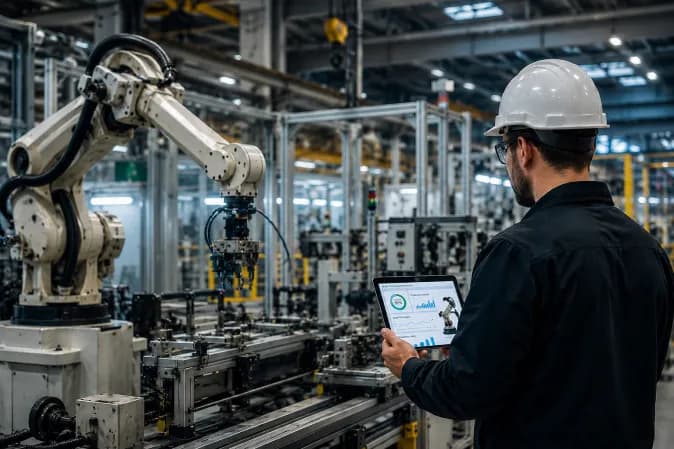
Learn how a mid-sized industrial equipment manufacturer streamlined production planning, inventory management, and procurement processes through a custom SAP S/4HANA implementation.
A manufacturing operations dashboard becomes a connected operational visibility system. It helps you:
Here are the main areas you can enhance with these dashboards.
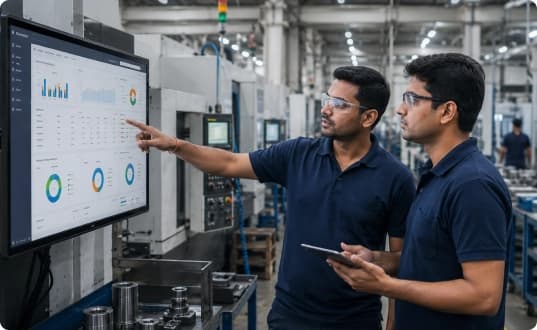
Your teams can track production output, WIP throughput, shift-wise activity, and operational efficiency from a single centralized dashboard.

You can monitor inventory movement, stock levels, procurement dependencies, and material availability in real time.
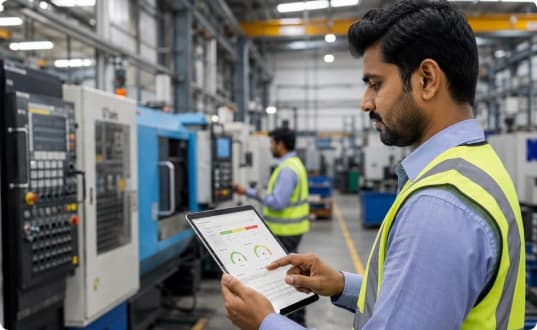
Operations teams can identify machine downtime, utilization losses, production hurdles, and workflow interruptions faster.

Management teams can monitor operational performance across plants, warehouses, production lines, and regions through connected dashboards.
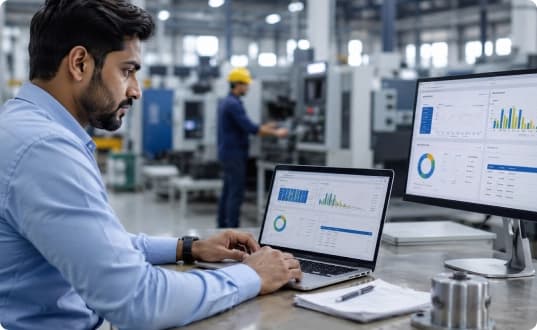
You can automate operational reporting for production KPIs, utilization, dispatch performance, inventory movement, and operational trends.

Your dashboard can integrate with ERP, MES, CRM, procurement, inventory, and production systems to improve operational visibility across departments.
Let's discuss how connected manufacturing dashboards can improve visibility across your production environment.
Talk To Our ExpertsAt MFG Software Lab, we use scalable technologies that support real-time operational visibility, connected reporting, and manufacturing system integrations.
Here's a quick overview of our most common stack.


These frameworks help build responsive operational dashboards for production teams, supervisors, management, and plant leadership.



We develop secure backend systems that efficiently process operational data, reporting workflows, machine inputs, and dashboard logic.



Our dashboards connect operational data across ERP, production, inventory, procurement, and manufacturing systems.



Flexible cloud infrastructure helps support growing manufacturing operations, multi-location visibility, and scalable reporting environments.


You get centralized visibility into production KPIs, downtime, inventory movement, utilization, and operational performance.
The right dashboard architecture improves visibility without forcing you to use disconnected legacy systems.
Choose the best architecture for your factoryA connected manufacturing operations dashboard is like a simple smartphone screen with all your important widgets in one place. However, this software goes beyond aesthetics with our careful analysis of crucial integrations.
Here are the major operational advantages manufacturers often look for.
Join the ranks of our Fortune 500 clients who've deployed practical dashboard solutions with our team.
Get In Touch To Know MoreWe keep our implementation practical, phased, and aligned with your existing operational workflows. The goal is to improve visibility without disrupting your production.

We understand your production workflows, reporting challenges, system dependencies, operational KPIs, and visibility gaps.

Our team defines dashboard structure, reporting logic, integrations, operational views, user roles, and KPI priorities.

We build the dashboard through phased development with operational feedback, reporting validation, and workflow alignment.

We launch the dashboard with onboarding, reporting optimization, operational adjustments, and long-term scalability planning.
Let's discuss the reporting, visibility, and operational challenges your dashboard needs to solve.

Yes. Our manufacturing operations dashboards can integrate with ERP, MES, CRM, inventory, procurement, and operational reporting systems.
Absolutely. We build dashboards that support visibility across multiple plants, production lines, warehouses, and operational environments.
Our dashboards can display real-time production KPIs, utilization, inventory movement, downtime, throughput, and operational performance.
Yes. We can build role-based dashboards for operations teams, plant managers, supervisors, procurement teams, and leadership stakeholders.
No. The dashboard works alongside your existing operational systems to improve visibility and centralized reporting.
Certainly, the dashboard architecture supports additional plants, workflows, integrations, reporting layers, and operational complexity over time.